Installation
A new electrical switchboard is one of the bigger works an electrician will do in your home. Here's what to expect for install.
Steps for install
Pick-up from wholesaler
Your electrician collects your Basis Board from their local trade wholesaler on the morning of install.
Arrive and prep the site
They set up the work area, protect your floors, and walk you through what's about to happen.
Power off, work begins
Mains power is turned off at the street. Your home is without power for the install window, usually 3–5 hours for a standard replacement and longer for complex jobs.
Remove old switchboard and meter
The existing switchboard is removed. If your meter is being replaced too, it comes out now.
Install the Basis Board
The new panel is mounted and every circuit is wired into it. In older homes some cables may need lengthening. This is a normal part of the job, not a surprise.
Power restored
Mains is switched back on and the panel runs its first safety scan. You'll have power again before the electrician leaves.
Safety settings configured
Your electrician configures each circuit's protection settings digitally: AFDD, RCBO sensitivity, Type-B DC, trip curves. Tuned to your home, in software.
Meter installed (if applicable)
If you're getting the Basis Meter, it goes into the supply zone of your panel. About 60 seconds, two screws.
Your part with the Basis Home App
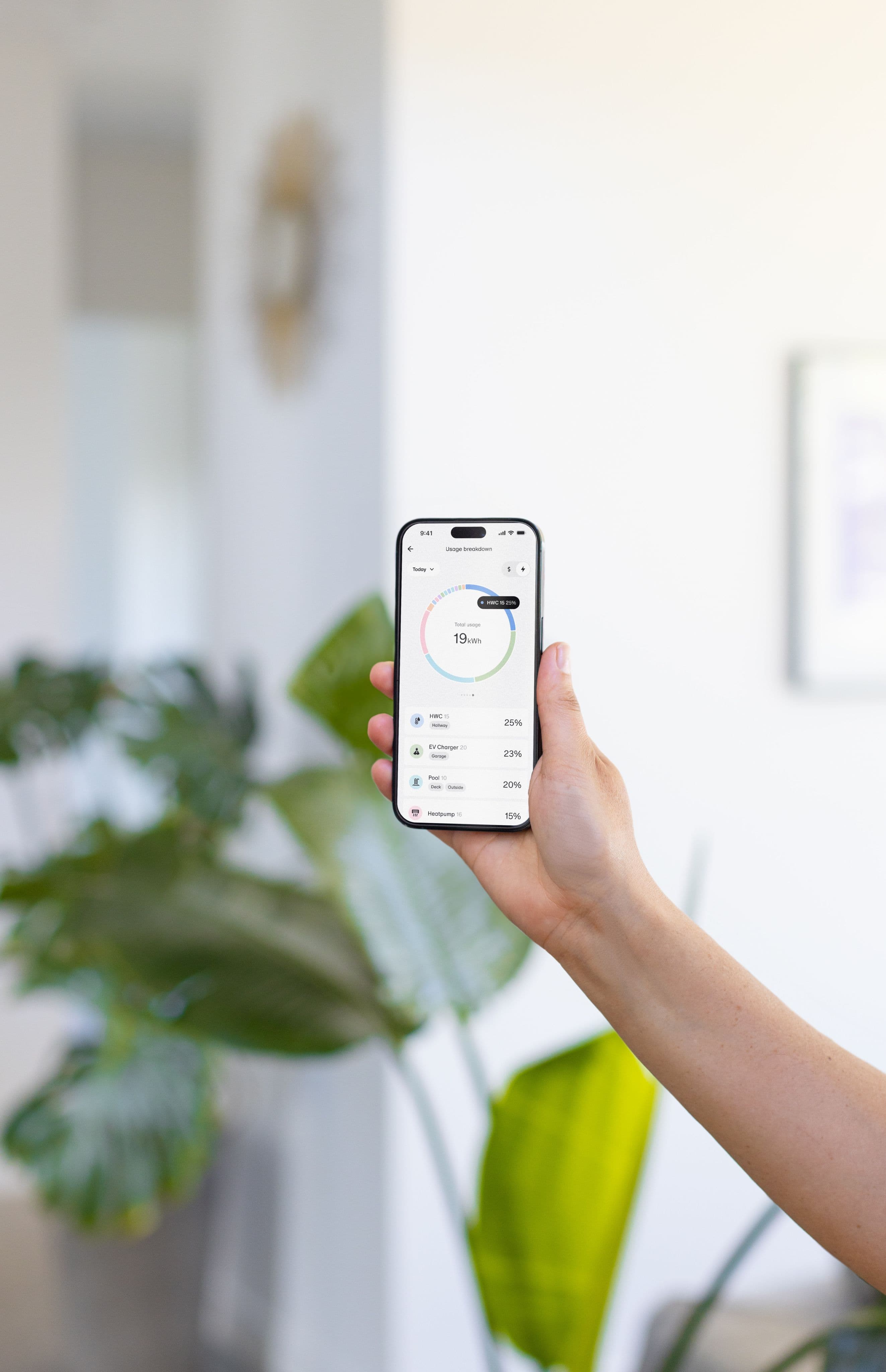
Download the Home App
Free on the App Store and Google Play. Installed while the electrician finishes up.
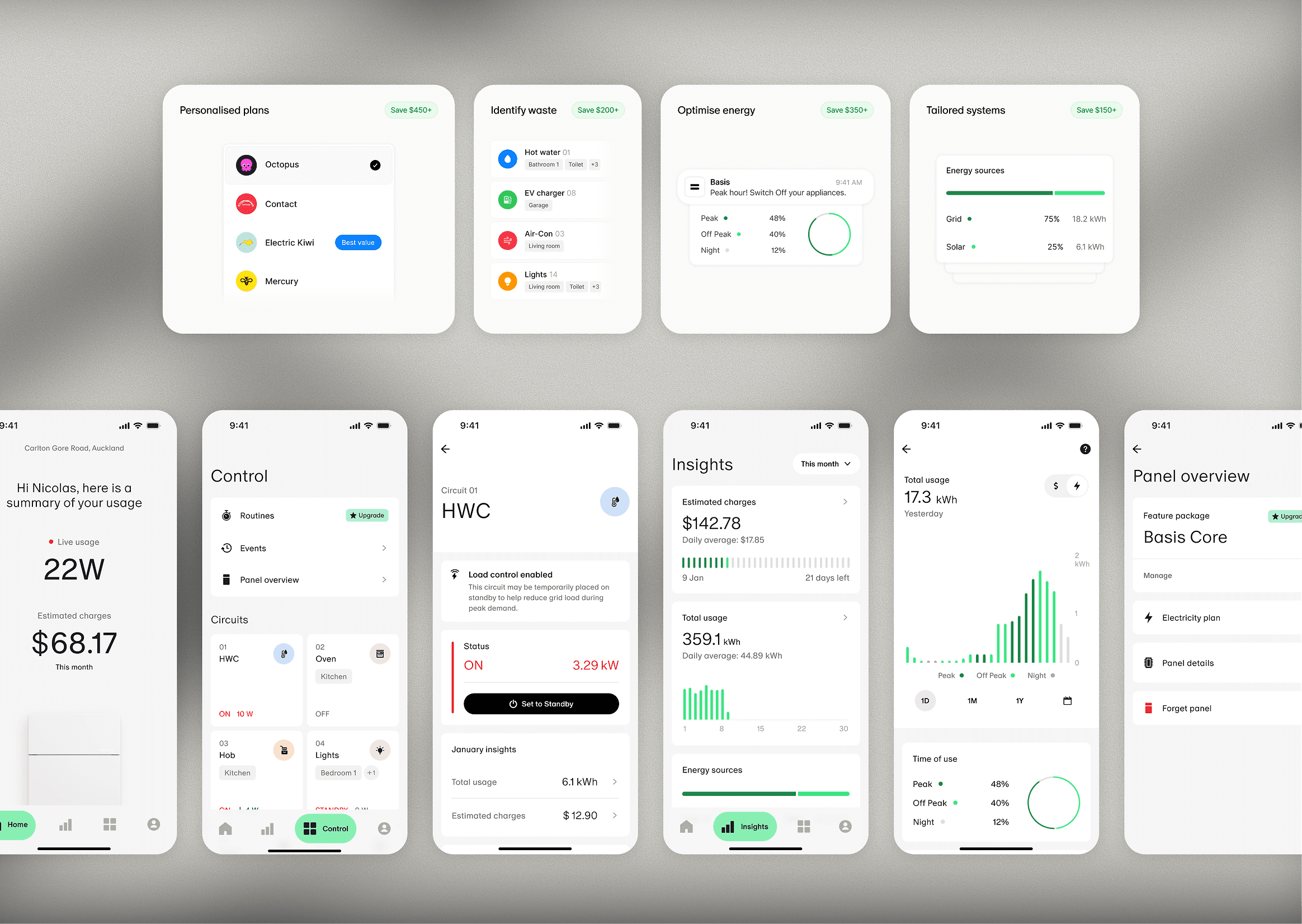
Connect your panel to Wi-Fi
One-tap pairing from the app. Your panel cross-checks identity with your electrician's commissioning key for security.
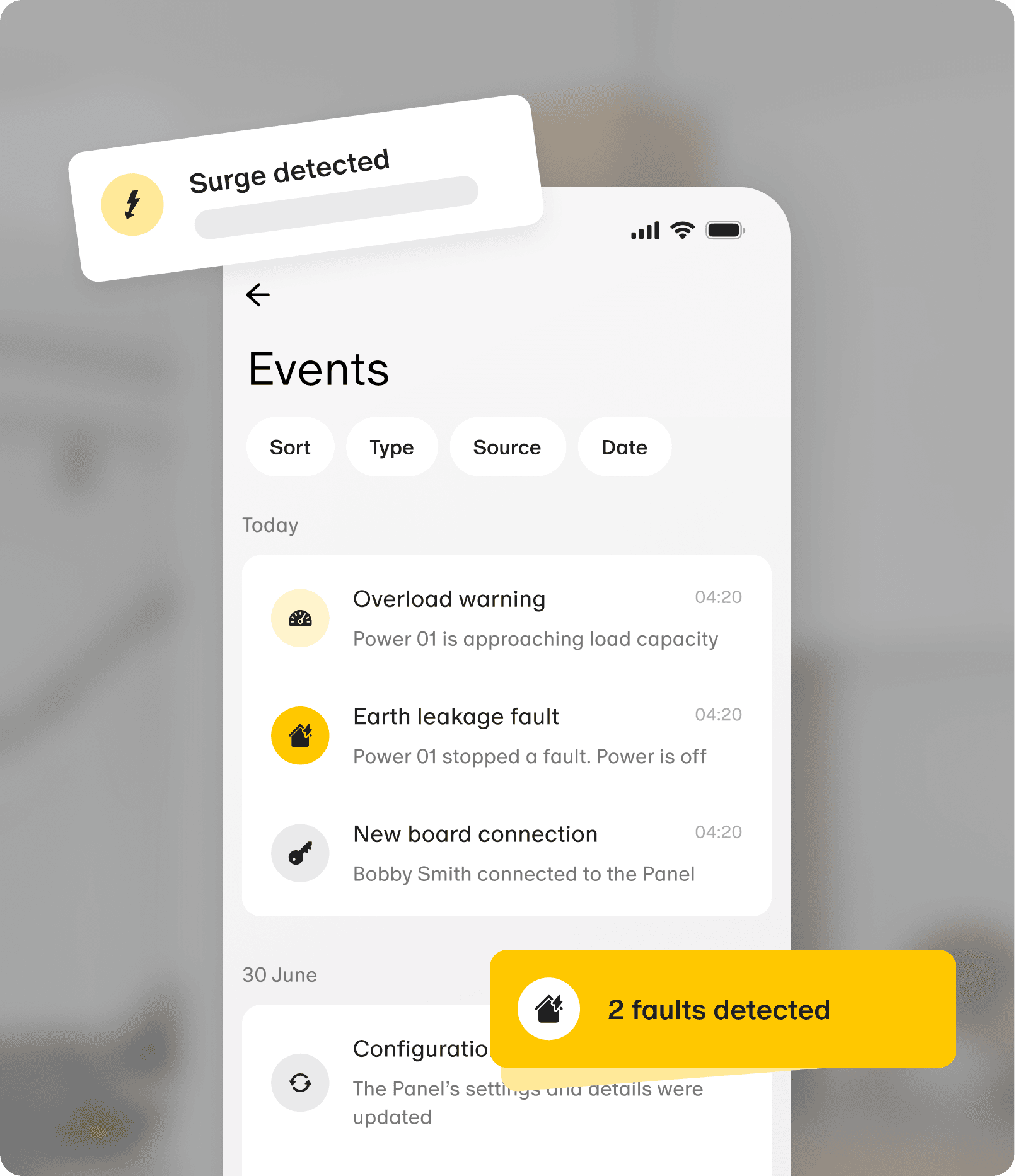
Tag your circuits
Walk your home, flick switches, watch the app respond. Name circuits as you find them: kitchen, hot water, spa, garage. This is how your home becomes yours in the app.
Install times vary.
These are real averages. Basis is typically around twice as fast as a legacy like-for-like swap because the panel arrives pre-built and circuits are configured in software. On a new build, where the wiring's already in place, it goes from unboxing to fully commissioned in under 45 minutes.
| Install type | Basis | Legacy switchboard | Share of installs |
|---|---|---|---|
| New buildWiring already in place | Under 45 min | ~2 hours | n/a |
| Simple replacementModern home, accessible wiring | 2–3 hours | 4–6 hours | ~15% |
| Standard replacementMost NZ homes | 4–5 hours | 6–10 hours | ~60% |
| Complex replacementOlder wiring, rework needed | 5–6 hours | 8–12 hours | ~15% |
| Very complexMajor rework / heritage / unusual layout | 6–8 hours | 10–16 hours | <10% |
No surprises.
We hear about these from customers after install. Here they are upfront, so nothing catches you out.
Each install is unique.
Two things change how long an install takes: the environment (how old your wiring is, how accessible the cavity is, whether cables need lengthening) and the electrician's familiarity with the product. Basis-certified sparkies are faster than first-timers. Both matter.
The wall may need a touch-up.
The new panel is the same footprint as your old one, but paint lines, old wallpaper edges, and plaster imperfections don't always match up. Most electricians won't quote plastering or painting; those are a separate trade. Factor this in upfront.
Every electrician is different.
We certify every electrician on Basis hardware and software. We can't certify how tidy their finish is. If the finish matters to you, ask to see previous installs before quoting. A good sparky will show you without hesitation.
Rewiring your house is separate.
Basis gives you control over every circuit in your panel, but the wiring behind the wall is already determined by your home. If you want a specific appliance on its own circuit (a spa, an EV charger, a heat pump), your electrician can quote adding one. The Basis Board makes it digital; it doesn't re-cable your house.
Works in different configurations.
Four install configurations cover almost every NZ home. Your electrician picks the right setup for your specific wiring, loads, and future plans.
Main panel
The most common install. Replaces your existing main panel like-for-like. Same footprint, same location.
Sub-panel
Basis can be installed as a sub-panel in addition to your existing main board, useful for extensions, sleepouts, or dedicated EV/solar circuits.
Grid-tied solar
Works with any standard grid-tied solar inverter. Basis reads your generation and consumption in real time for accurate self-consumption and export data.
Solar + battery
Grid, solar, battery, EV on one board. Basis reads the whole stack in real time, generation, consumption, storage and DC faults, so you see exactly where every kWh goes.
100% compliant.
Basis meets or exceeds every current New Zealand and Australian electrical standard. The panel is type-tested, certified, and shipped with the documentation your electrician needs for sign-off.
Older boards can fall short on fire egress, or quietly drift out of compliance the moment work is done on them. Basis was engineered from the ground up so that can't happen. Type-tested, certified, and shipped to meet the current standard.
Wiring rules. Full compliance. Every install shipped matches the current edition.
Low-voltage switchgear assemblies. Basis Boards are type-tested to this standard.
Fire-resistant foam at every cable entry. Built to meet current building-code egress standards on the day it goes in.
Basis constantly self-tests its protection. You get alerted if anything's wrong.