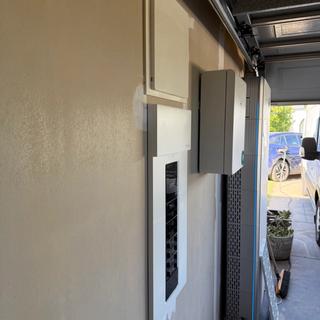
“The Basis Board was the same width as the existing one, so I just cut the gib to suit and it slotted straight in. Fitting off was a breeze, plenty of room to work, and the build quality really stood out, decent gauge stainless steel that feels strong and durable. Being my first install I took my time, but from opening the box to programming the last circuit was about five hours, where a traditional board that size could easily take the whole day. Once you install one you won't want to go back to a traditional switchboard ever again.”
On the install
The decision to fit a Basis Board came late on this new build, just before fit off, so Cameron swapped it in for the existing one. With matching widths it was a case of cutting the gib to suit the front-mounted body and it slotted straight in, the front fixing making it easy. Fitting off was a breeze with plenty of room to work, and even with no internet on site the trade app connected and configured without a hitch. Being his first install he took his time, yet went from opening the box to the last circuit in about five hours, where a traditional 20-circuit board could easily take the whole day.
What stood out
What stood out most for Cameron wasn't the tech, but the quality. The stainless steel body felt strong and durable, the chassis screws locked into place perfectly, and the clips and covers went on easily and stayed put, a refreshing change from the flimsy frames he's used to. The customer hadn't moved in yet but was already impressed with the look, and with arc fault protection pre-loaded and ready to go, something they'd been put off adding because of the cost of traditional din-rail protection, it became one of the real selling points.
A first install done in about five hours, with standout build quality and arc fault protection built in. He won't be going back to a traditional board.